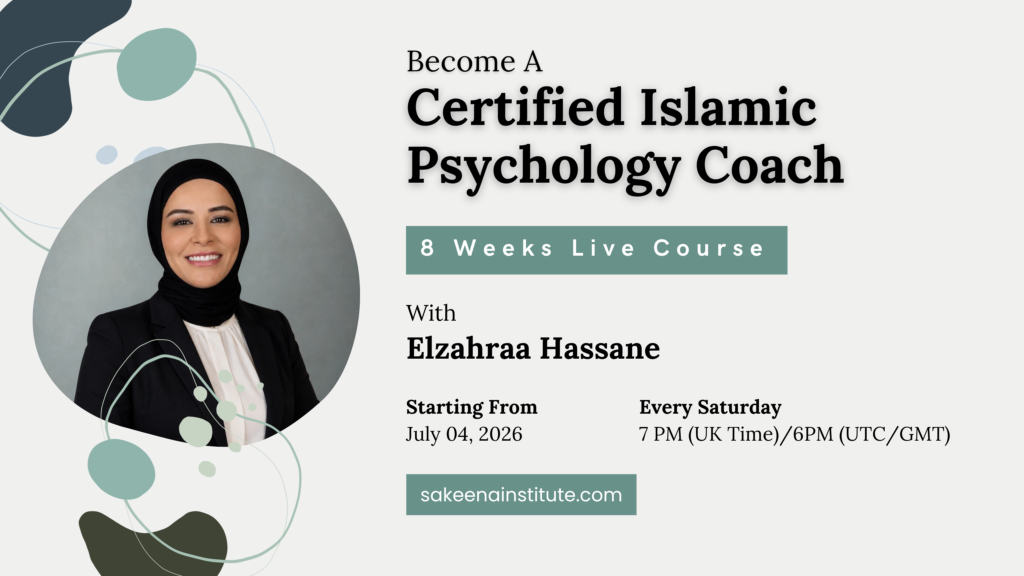
Programme Overview
This comprehensive certification equips students with the knowledge, practical coaching skills, and ethical framework required to guide Muslims through emotional and spiritual challenges while remaining within the professional scope of coaching.
The programme integrates authentic Islamic teachings with evidence-informed psychology, neuroscience, and professional coaching methodologies to develop confident and ethical Islamic Psychology Coaches.
Session 1
Foundations of Islamic Psychology
Understanding the Human Being Through the Lens of Islam
Learning Objectives
Students will explore:
- Introduction to Islamic Psychology
- The difference between coaching, counselling, psychotherapy and psychology
- The scope and responsibilities of an Islamic Psychology Coach
- The purpose of human creation
- Understanding the Fitrah
- The Qalb, Nafs, Rūḥ and ʿAql
- Human behaviour from the Qur’an and Sunnah
- The relationship between faith and psychological wellbeing
- Spiritual and psychological causes of emotional suffering
- The Islamic model of emotional healing
Session 2
Neuroscience, Human Behaviour & Emotional Intelligence
Learning Objectives
Students will understand:
- Brain fundamentals for coaches
- Stress and the nervous system
- Fight, Flight and Freeze responses
- Emotional regulation
- Neuroplasticity
- Behaviour formation
- Motivation and behavioural change
- Habit formation
- Emotional intelligence
- Self-awareness and emotional resilience
- Why people struggle to change
Session 3
Emotional Healing Through Islamic Psychology
Learning Objectives
Understanding the emotional struggles affecting Muslims today.
Topics include:
- Anxiety
- Stress
- Overthinking
- Fear
- Low mood
- Grief
- Shame
- Guilt
- Attachment
- Trauma awareness
- Emotional wounds
- Spiritual diseases of the heart
- Tawakkul as emotional regulation
- Hope, patience and resilience through the Qur’an and Sunnah
Session 4
Practical Coaching Workshop
Live Supervised Coaching Practice
This session is entirely practical.
Students will apply everything learned in Sessions 1–3 through guided coaching exercises under live supervision.
Practical Training Includes
- Building rapport
- Active listening
- Powerful questioning
- Reflective listening
- Emotional validation
- Structuring a coaching conversation
- Goal clarification
- Pair coaching practice
- Small-group coaching exercises
- Live demonstrations
- Constructive instructor feedback
- Confidence-building exercises
By the end of this workshop, students will have completed their first supervised coaching conversations.
Session 5
Evidence-Informed Coaching Skills & Practical Coaching Models
Learning Objectives
Students will learn how to integrate professional coaching techniques within an authentic Islamic framework.
Topics include:
- Professional coaching framework
- Active listening mastery
- Effective communication skills
- Building transformational coaching conversations
- Solution-Focused Coaching
- CBT-informed coaching techniques (within coaching scope)
- ACT-informed coaching techniques (within coaching scope)
- Behaviour change strategies
- Motivation and accountability
- Values-based coaching
- Habit transformation
- Islamic reflective exercises
- Structuring a complete coaching session
Session 6
Coaching Real-Life Challenges, Ethics & Professional Practice
Learning Objectives
Applying Islamic Psychology to real-life situations while maintaining ethical and professional boundaries.
Topics include:
- Anxiety and stress coaching
- Burnout
- Family conflict
- Marriage challenges
- Parenting concerns
- Youth struggles
- Identity and purpose
- Spiritual disconnection
- Building resilience
- Islamic coaching ethics
- Confidentiality
- Professional boundaries
- Referral pathways
- Recognising red flags
- When coaching is not appropriate
- Working alongside mental health professionals
- Building an ethical coaching practice
Session 7
Advanced Case Studies & Professional Integration
Learning Objectives
Preparing students for independent coaching practice through advanced application.
Topics include:
- Complex coaching scenarios
- Multi-session coaching plans
- Goal-setting and accountability
- Integrating Islamic guidance appropriately
- Working with different personalities
- Difficult coaching conversations
- Common coaching mistakes
- Documentation and session planning
- Preparing for the final practical assessment
Session 8
Final Practical Coaching Assessment & Certification
Live Certification Assessment
This final session assesses each participant’s ability to conduct a professional coaching session.
Assessment Components
Part One — Knowledge Review
Students demonstrate their understanding of:
- Islamic Psychology
- Human behaviour
- Coaching methodology
- Ethics
- Professional boundaries
- Referral decision-making
Part Two — Live Coaching Assessment
Each participant conducts a complete coaching session under instructor observation.
Assessment criteria include:
- Professionalism
- Rapport building
- Active listening
- Communication skills
- Powerful questioning
- Emotional validation
- Coaching structure
- Appropriate integration of Islamic guidance
- Goal setting
- Ethical decision-making
- Session closure
Part Three — Personalised Feedback
Every participant receives detailed feedback on strengths, areas for development, and readiness to begin coaching.
Certification
Participants who successfully complete:
- All live sessions
- Practical Coaching Workshop
- Final Practical Assessment
will be awarded the:
Certified Islamic Psychology Coach™
What You Will Learn
- Foundations of Islamic Psychology
- Emotional Healing
- Neuroscience for Coaches
- Human Behaviour
- Emotional Intelligence
- Coaching Skills
- Active Listening
- Effective Communication
- Behaviour Change
- Habit Formation
- Attachment Theory
- Trauma Awareness
- Anxiety & Depression Awareness
- Islamic Counselling Principles
- Solution-Focused Coaching
- CBT-Informed Coaching
- ACT-Informed Coaching
- Professional Ethics
- Referral Boundaries
- Practical Coaching Skills
- Case Study Analysis
- Professional Coaching Frameworks
Progression Pathways
Graduates may continue into specialist certifications offered by Sakeena Institute:
- Certified Marriage & Relationship Coach
- Certified Parenting Coach
- Certified Trauma Recovery Coach
- Certified Youth Coach
- Certified Women’s Emotional Wellbeing Coach
- Certified Tawakkul & Resilience Coach
- Certified Grief & Loss Coach
- Certified Workplace Wellbeing Coach